
Pauline Kleinberg
1925–2005
A Life of Survival, Family, and Remembrance
Pauline Kleinberg was born Pola Pariser in Pilica, Poland, where she grew up in a close-knit Jewish family. Her parents operated a dry-goods store, and Pola and her siblings helped with the family business. Her childhood was shaped by family, Jewish traditions, and life in a small Polish town.
That world was shattered by the Second World War and the Nazi persecution of European Jews.
A Family Torn Apart
In 1940, men believed to be Gestapo officers entered the family home and assaulted Pola’s father. He never recovered from his injuries and died a few weeks later.
In September 1942, as the Nazis began clearing Pilica of its Jewish population, Pola’s mother faced an agonizing choice. With her husband dead and the Nazis closing in, she knew that keeping her children together could mean losing them all. Their best hope of survival was to separate. She arranged for her youngest daughter, Lola, to be sheltered by a non-Jewish family. Her son Hershel planned to fend for himself, while her eldest daughter, Sala, was already married and living elsewhere.
Pola and her sister Malka wanted to remain with their mother. But she insisted that they flee. When Pola asked where they should go, her mother answered simply, “Just run.” After a final kiss, the sisters left their home, joining other frightened refugees on the roads. Pola never saw her mother again.
The sisters eventually reached Żarki, beginning years of ghettos, forced labor, and illness. Through it all, they sustained one another.
At one concentration camp, Pola and Malka were forced to stand naked before German officers who examined each prisoner and directed them into separate groups. Neither sister knew which group would survive. Terrified of losing each other, they awaited their fate. Both were assigned to the same group and received numbered identification necklaces, marking them for continued imprisonment and forced labor. Those sent in the opposite direction were never seen again.
As the war neared its end, the sisters were forced onto a death march. Malka became too weak to continue. Pola refused to leave her, but the guards forcibly separated them. Malka died on the day of liberation, just hours before help could reach her.
A New Beginning
Pola survived. Malka did not. Her mother was gone. So was Hershel. Sala and her baby perished at Auschwitz. Liberation brought uncertainty.
After the war, Pola found refuge at the Föhrenwald displaced persons camp near Munich, Germany. There she was reunited with her sister Lola, whom she had feared lost. Their reunion brought renewed hope after years of unimaginable suffering.
At Föhrenwald, Pola met Abram Kleinberg, a fellow survivor from Poland. In 1946, Pola and Abram married in a double wedding with Lola and Sam Gross.
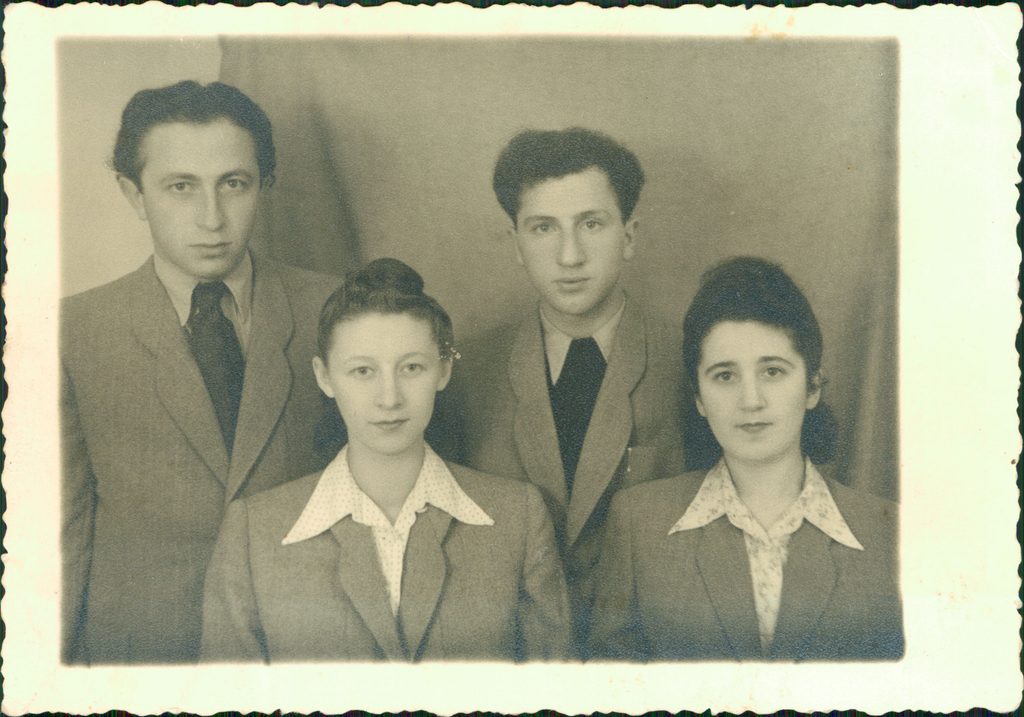
Föhrenwald displaced persons camp, Germany, 1946. The double wedding of sisters Pola (Pauline) and Lola Pariser to Abram (Abraham) Kleinberg and Sam Gross, respectively.
During their time at Föhrenwald, Pola and Abram adopted the names Pauline and Abraham, which they would use in their new lives in America.
In 1950, Pauline and Abraham immigrated to the United States and eventually settled in the Detroit area, where they established a home and raised their two children.
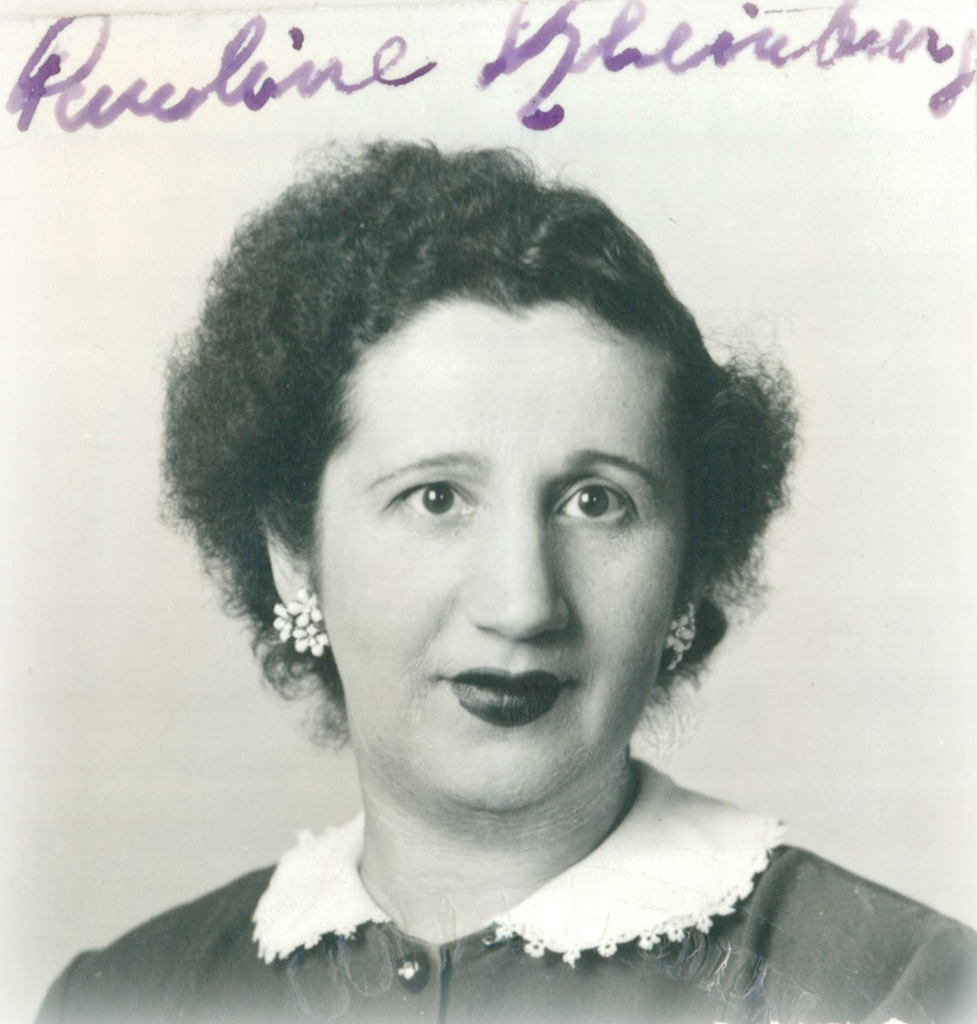
Pauline Kleinberg, 1955. Photograph from her naturalization records.
Family and Community
For Pauline, rebuilding a family was especially meaningful after the losses she had endured. She and Abraham worked to provide their children with opportunities, stability, and a connection to Jewish life.
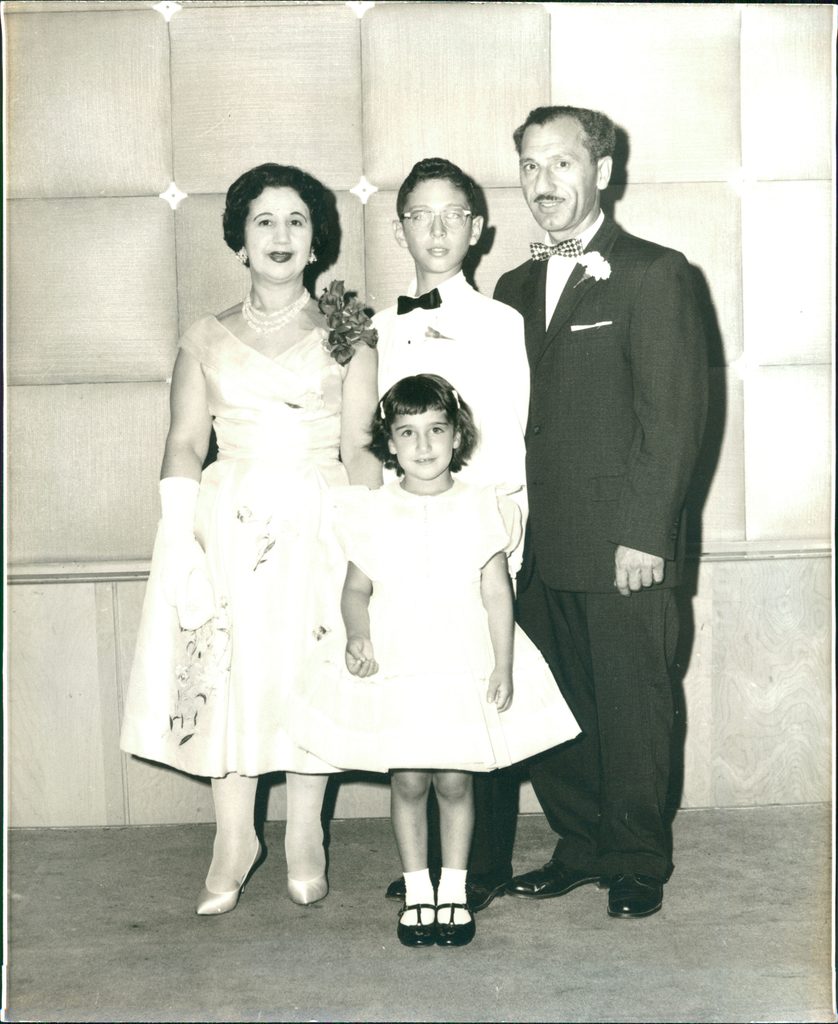
Detroit, 1960. Pauline and Abraham Kleinberg with their son and daughter at their son’s bar mitzvah. Both children were named in memory of family members who perished during the Holocaust.
Pauline and Abraham also became active in the Detroit area’s community of Holocaust survivors. Organizations such as Shaarit Haplaytah provided companionship, mutual support, and a shared commitment to remembering those who had perished.
The friendships formed among survivors became an extended family. In her later testimony, Pauline described the survivor community as the aunts and uncles who had taken the place of so many relatives lost during the Holocaust.
Bearing Witness
On October 28, 1982, Pauline recorded an extensive oral history interview with Arthur Kirsch in Oak Park, Michigan, for the University of Michigan–Dearborn’s Voice/Vision Holocaust Survivor Oral History Archive.
In that interview, she recounted her childhood in Poland, the destruction of her family and community, her experiences during the Holocaust, and the difficult process of rebuilding her life.
She also reflected on Jewish identity, Israel, family, and the importance of teaching future generations what had happened.
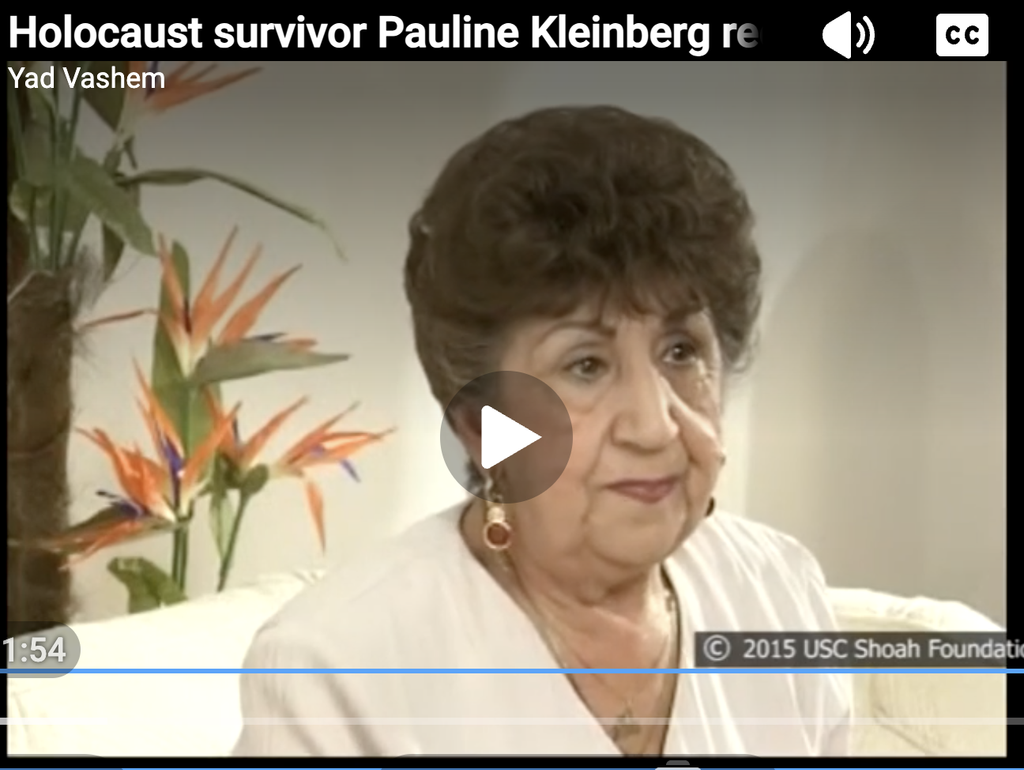
Pauline Kleinberg recounting her Holocaust experiences in a recorded interview, 1982. Video excerpt published by Yad Vashem. © 2015 USC Shoah Foundation.
Her testimony remains publicly accessible through the University of Michigan–Dearborn Voice/Vision Holocaust Survivor Oral History Archive. Her life story is also documented by Portraits of Honor, a project associated with the Zekelman Holocaust Center.
Through these records, Pauline’s experiences continue to educate others long after her death.
Continuing Her Commitment
In the early 1980s, Pauline and Abraham moved to South Florida, where they continued their involvement with the Holocaust survivor community.
Pauline remained dedicated to preserving the memory of those who had perished and maintaining the bonds among those who had survived.
By approximately 1995, she was serving as Vice President of Holocaust Survivors of South Florida, continuing the work that had been so important to her and Abraham during their years in Michigan.
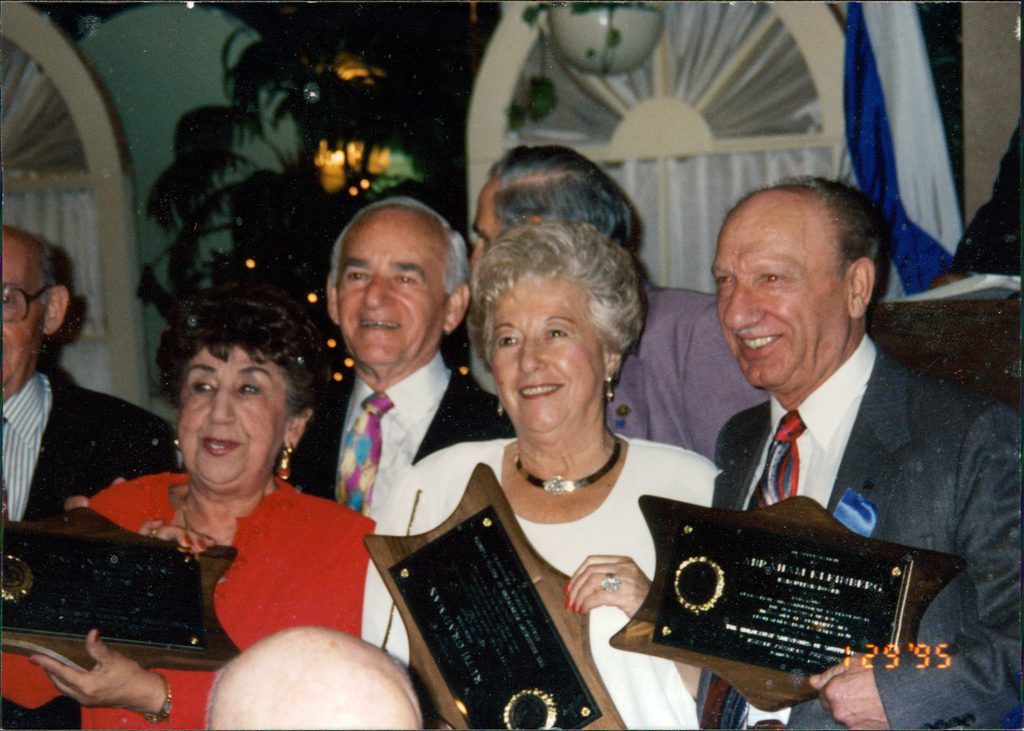
Pauline and Abraham Kleinberg (left and right), receiving recognition alongside fellow Holocaust survivors in South Florida, April 29, 1995.
Pauline continued to make her home in Florida until her death in 2005.
Her Legacy
Pauline Kleinberg’s life was marked by extraordinary loss, but also by renewal, devotion to family, and service to her community.
Together with her husband Abraham, she helped rebuild what the Holocaust had sought to destroy: a Jewish family, a sense of belonging, and a connection between generations.
Her recorded testimony and her work with fellow survivors reflect a conviction that the experiences of the past must not be forgotten.
The Kleinberg Foundation honors Pauline’s memory alongside Abraham’s through its commitment to supporting Jewish life, learning, and community.